Molly Wiesman
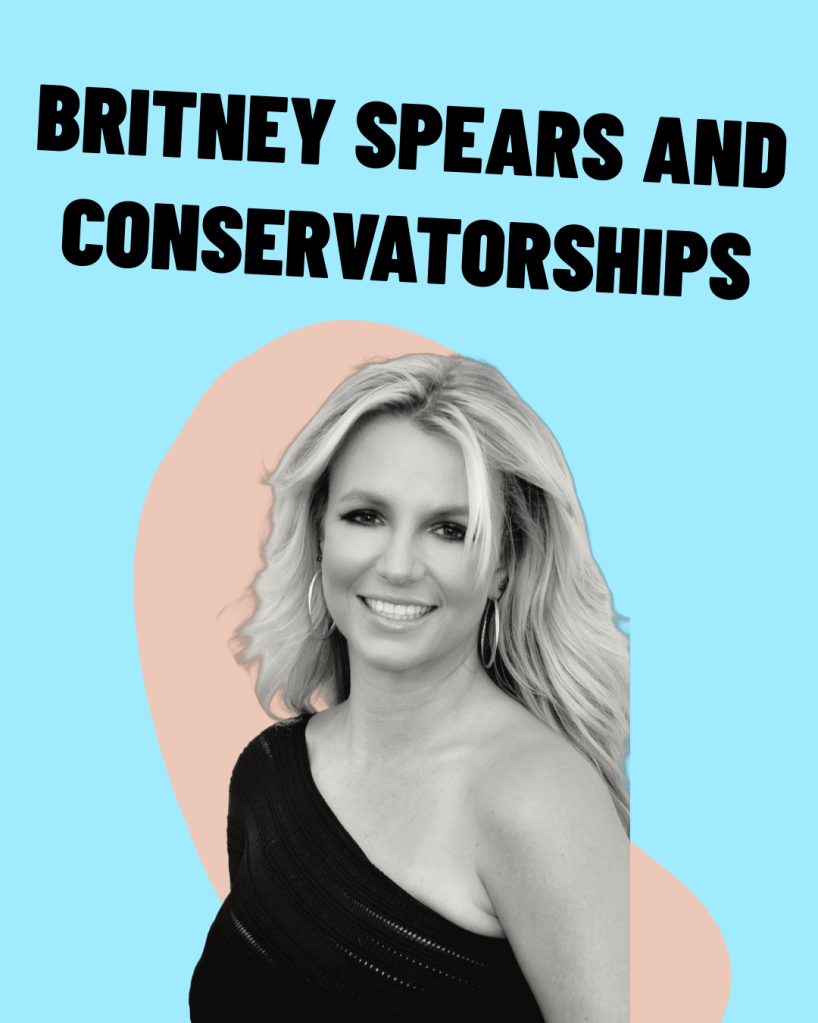
In a recent court hearing attempting to get her father removed from his role as her conservator, or what is also known as a guardian, Britney Spears compared the constraints she has been living under the control that sex traffickers have over their victims. She testified that possessions such as her credit card, cash, phone and passport were taken away from her, and claimed that as a result of never being given privacy. Those who were living and working with her had the liberty to watch her change and see her naked body. She also claims she never had input into her work schedule and was threatened with not being allowed to see her children and boyfriend unless she met three times a week with her therapist and psychiatrist. Limitations like the ones placed on Spears by the type of conservatorship she is in are what so much of the public outcry over the case has been about. Rights a person might not have under conservatorship may include the loss of the ability to make decisions about where they work, get mental health treatment, and their ability to determine who they associate with as well as the loss of the right to vote. The question that has arisen in the Britney Spears case is if Spears’ conservatorship is truly a necessary arrangement to ensure her best interests, or was it cause for a suffocating loss of autonomy that has had detrimental consequences on her life?
Spears was placed in the conservatorship by the court in 2008 after a very public struggle with mental health that resulted in her being hospitalized and placed under what is known as a 5150 hold, allowing a person to be hospitalized without their consent, after Spears locked herself and her two sons in a bathroom in her house when her ex-husband came to pick up the boys for visitation. In recent years, Spears’ efforts to get out of the conservatorship have shed a light on the important issues of the sometimes necessary, but often confining, impact of conservatorships on the lives of people with disabilities.
Jenny Hatch, a young women with down syndrome, was forced into a conservatorship after her mother was injured in a bike accident and was left unable to care for her. Hatch successfully battled to get out of her conservatorship. This spurred the creation of the Jenny Hatch Justice Project, which provides support to people with disabilities and those who play key roles in their lives, giving the tools they need to protect and promote their rights to make their own choices about how they want to lead their lives.
Morgan Whitlatch is the director of the Jenny Hatch Justice Project The type of disabilities that people in conservatorships have varies greatly, and Whitlatch believes that it is important to point out the distinction needs to be made that conservatorship not only impacts the elderly or people who have developmental disabilities, but that people with all kinds of disabilities are placed under conservatorships, which are not specific to one kind of disability, or even one kind of group of people. Whitlatch observes that a conservatorship “….impacts a broad swatch of people and has the potential to impact all of us as we age.” One common instance where the need for conservatorship may be seen as necessary is when adults with disabilities age out of the special education system at the age of 22 and the rights parents had over them come to an end, although the parents still may find it necessary to, as Whitlatch puts it, “act in the role they acted in before.”
The down sides of conservatorships, like the ones that have come to light with Spears’ testimony in her case, have the potential to arise when the person placed in the conservatorship is not asked to be involved in decisions involving them. Whitlatch makes the observation that although best practices for conservatorship indicate that the conservator should involve the person in decision making, this doesn’t always happen because the conservator is the one that has the final say.
Conservatorships have many specific potential pitfalls, including that they aren’t time limited, and the person under them often does not know what their legal rights are in relationship to their conservatorship. It is not only people with intellectual disabilities who may find themselves under conservatorships, but also people with serious mental health challenges. Whitlatch observes that it’s unknown how many people with disabilities are under conservatorships, but estimates there might be as many as 1.3 million. However, it is known there are three times as many people in conservatorships currently than there were in 1995.
There are three types of conservatorships – limited, temporary, and full. With a limited conservatorship, conservators only have certain powers that are determined by the abilities of the person under the conservatorship. A temporary conservatorship is implemented only for a time limited period. With a full conservatorship, like the one Spears has, the conservator is given complete control over the finances of the person in the conservatorship and all parts of their estates.
Whitlatch explains that courts have a tendency to resort to generalized conservatorships as opposed to limited ones. “In some states, they’re supposed to be encouraging tailored guardianships….only limited to the areas where people can’t make decisions for themselves, and there’s not a less restrictive option that could be used instead of court intervention.” Some conservatorships only cover specific areas like finances and medical decisions, but general conservatorships, like the one Spears has, are far more common. Some states have limits on what a conservator can do without going back to court to get special permission. Instances of this include when a conservator wants to force someone to have an abortion or undergo electroshock treatments. In some instances, under the power of some conservatorships, people have been forced to live in group homes or work in sheltered workshops against their will, denied the right to marry, pushed into forced sterilizations, and have been denied access to their own money, their ID, their phone or a computer.
Many disability advocates champion the idea of supportive decision making for people with disabilities as an alternative to conservatorship, allowing a person to be able to make their own decisions with the support of people of their choice who they trust. Supportive decision making allows someone to gather input from the support network around them in order to come to a decision, as opposed to a conservator being able to have so much influence and control of the circumstances surrounding the person. Whitlatch makes the distinction between supportive decision making and conservatorship, saying that, “In supportive decision making, you’re getting advice and help from other people but you’re the decision maker – nobody else is making the decision. You’re the one signing on the dotted line.”
Whitlatch emphasizes the benefits of alternatives to conservatorships such as implementing powers of attorney or supportive decision making, along with financial arrangements that don’t involve the removal of rights. She also observes that in certain cases, the implementation of a conservatorship may be necessary, but advises that when it is, it should be time limited and tailored.
Whitlatch points out the danger in viewing the Britney Spears case as an outlier in a sea of an unknown number of people who may be living under conservatorships needlessly, and that there is the potential for harm when Britney’s case is differentiated from that of others in conservatorships because of her celebrity status. “She’s not alone,” Whitlatch points out, adding that “There are people who have been in similar circumstances without her kind of financial resources who haven’t been able to control their own bodies or their reproductive rights who haven’t been able to marry, who haven’t been able to gain access to their own money, who haven’t been able to travel, who haven’t been able to associate with certain people, who haven’t be able to vote.” Whitlatch hopes that Britney’s case highlights the potential harms of unnecessary conservatorships, and that her case causes reforms to be made that highlight positive alternatives to conservatorships that place less restrictions on people who may need the kind of structured support system that the conservatorship intends to provide.
On August 12, Jamie Spears said that he would eventually step down as Britney Spears’ conservator “when the time is right,” and that a new conservator would be appointed, indicating that his willingness to step down does not mean the end of the conservatorship all together. It remains to be seen what impact Spears’ conservatorship case will have on the future of conservatorships for people with disabilities who rarely have the privileges and status that Spears has. But one hopes that her case shines a light on the numerous other examples of people placed in conservatorships that may be unnecessary or have overreaching constraints , and that legislative changes will be made to prevent the sometimes oppressive restraints of conservatorship from happening in the future.
 Imagine the World as One Magazine